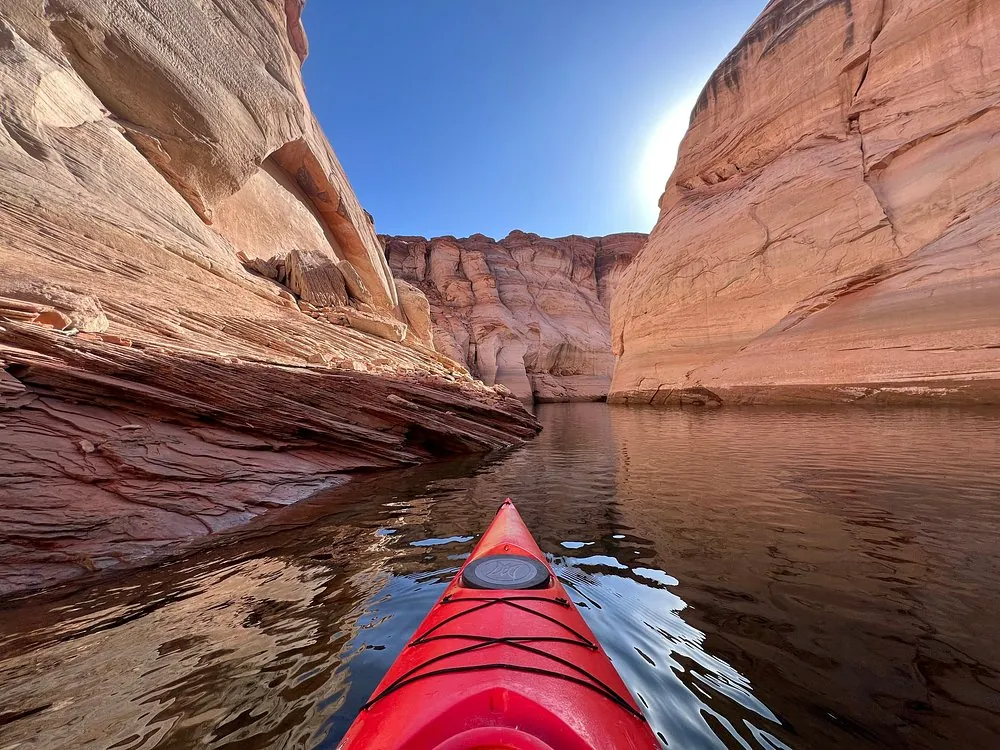
Lake Powell in October can be one of the best times to plan a day on the water. The peak-summer heat begins to loosen its grip, the light turns warmer on the sandstone and a morning paddle can feel more like a vacation than an endurance test. It is also a month that rewards people who plan for the whole day instead of packing for the afternoon they hope to have.
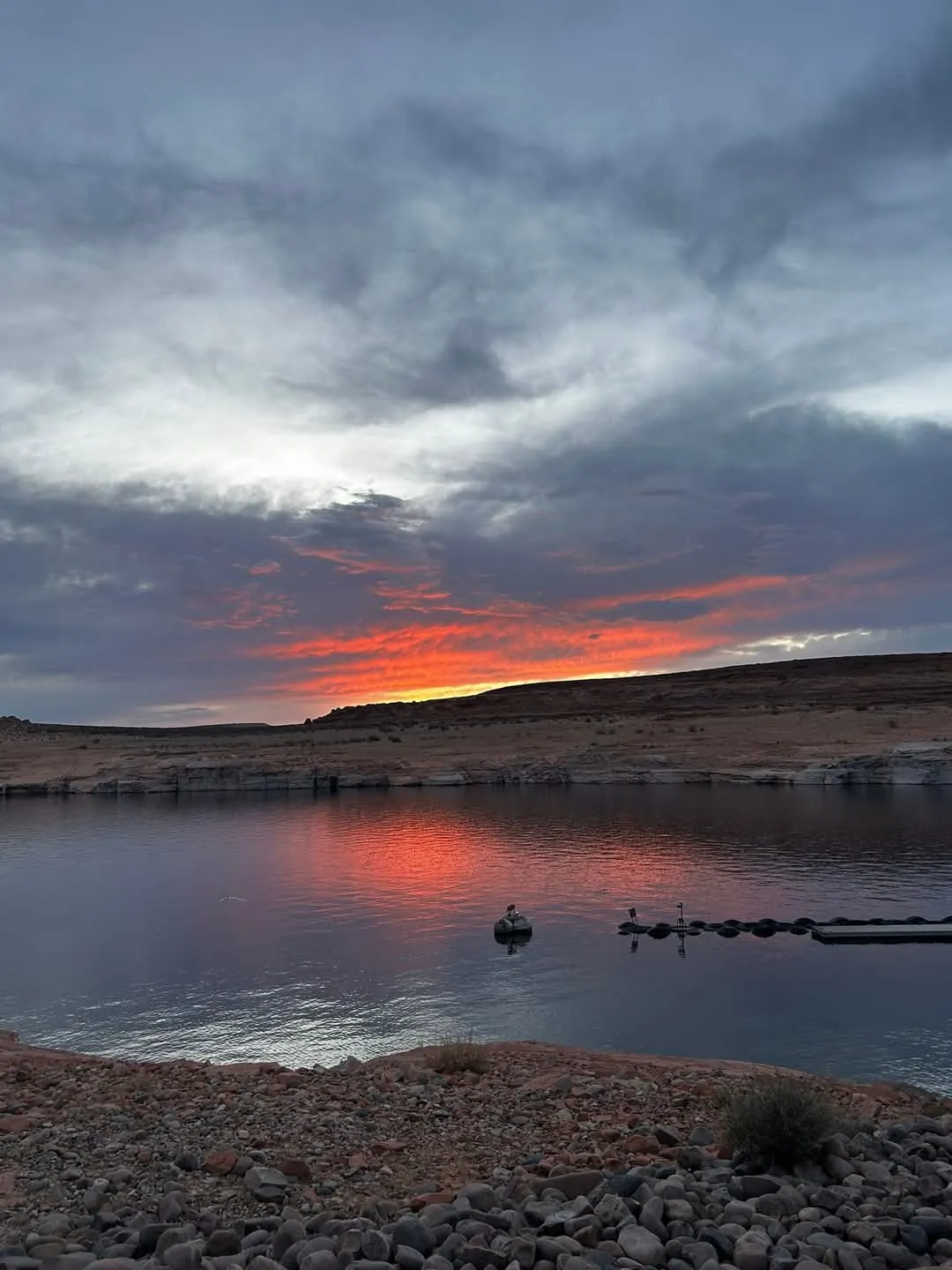
That distinction matters here. October can bring a glorious, mild morning, a breeze across open water, a shaded canyon that feels much cooler than the parking lot and a sunset that arrives sooner than summer visitors expect. The water is still Lake Powell, the wind still gets a vote and the shoreline can still change. The right plan is not complicated, but it should be current.
This guide is for travelers deciding whether October is right for a Lake Powell kayak day, what kind of route fits the season and what to bring so nobody spends the last mile wishing they had packed one more layer. Whether you are joining a guide or paddling independently, a little practical thinking makes the day much easier to enjoy.
Why October Feels Different at Lake Powell
October is a transition month, which is exactly why many visitors like it. The summer crowds thin, the strongest heat becomes less constant and the landscape feels less hurried. The National Park Service says fall weather in Glen Canyon is usually nice and mild, making it a good season to escape both heat and crowds. That is a useful starting point, not a promise that every day will feel the same.
The difference shows up most clearly in the rhythm of a trip. In July, the question is often how to get on the water before the day gets too hot. In October, you have more room to choose a comfortable start, pause for a canyon walk and enjoy the return without treating every exposed minute as a race against the heat. For families, first-time paddlers and visitors who want time for photos, that slower rhythm is a real advantage.
Cooler air does not remove the need for sun protection or water. Lake Powell is still high-desert country, shade can be limited and reflected light off the water is no joke. Think of October as a more forgiving month, not a soft one. Comfortable preparation gives you freedom to enjoy the changes instead of being surprised by them.
What October Weather Means for a Paddle
A useful October plan starts with the specific hours you expect to be outside. Check the forecast the day before and again the morning of your outing. The National Weather Service's Lake Powell marine forecast is more useful than a city-only forecast because it speaks to conditions on the water, where wind and waves can change the experience quickly.
Morning is often the easiest window for a paddle, especially for groups who want smoother water and a relaxed return. That does not mean every morning is calm, and it does not mean a pleasant launch guarantees a pleasant finish. A route across open water can feel very different once a breeze begins to build. Build your day around a clear turnaround point rather than a destination you feel obligated to reach.
Temperature also changes across the day. Start layers can feel unnecessary by noon, then become welcome again after a break in shade or once the boat is pointed back into a breeze. Pack a light wind layer where you can reach it, rather than under everything else in a dry bag. Small choices like that are what keep a beautiful day from becoming a fussy one.
Water, Wind and Changing Shoreline Conditions
October is not a reason to stop checking water conditions. Lake Powell's shoreline, launch distance and services can change with water levels, and conditions at one ramp can matter more than a general lake number. The National Park Service's changing lake-level page is the place to check before an independent launch, particularly when you are relying on a specific ramp or carrying a lot of gear.
Wind deserves the same respect as temperature. It can push a tired group farther from shore, turn a quiet bay choppy and make a route that felt simple on paper feel like much more work. Keep the plan conservative: stay close to shore where practical, keep the group together and turn back early when the water starts telling you that the day has changed.
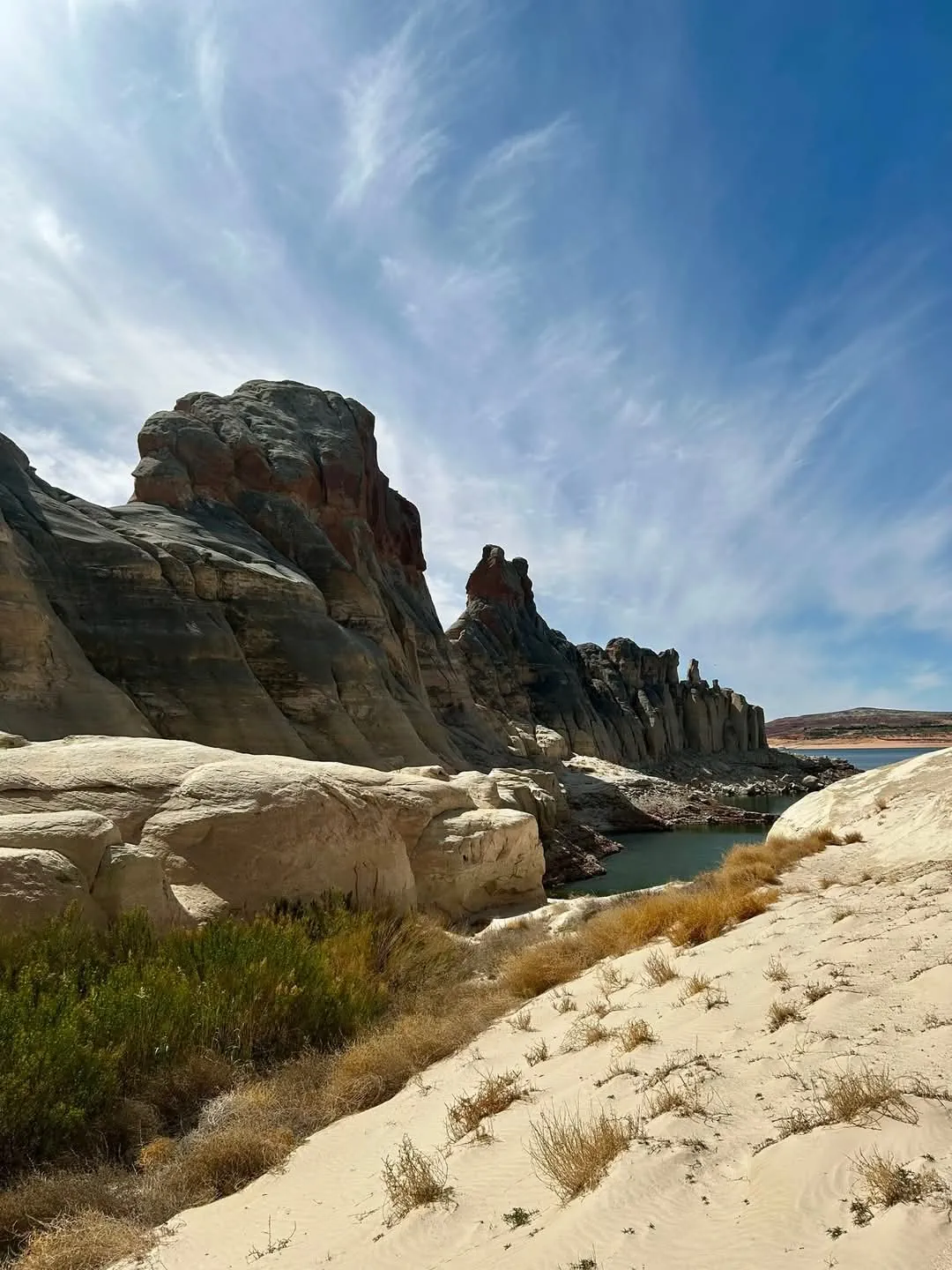
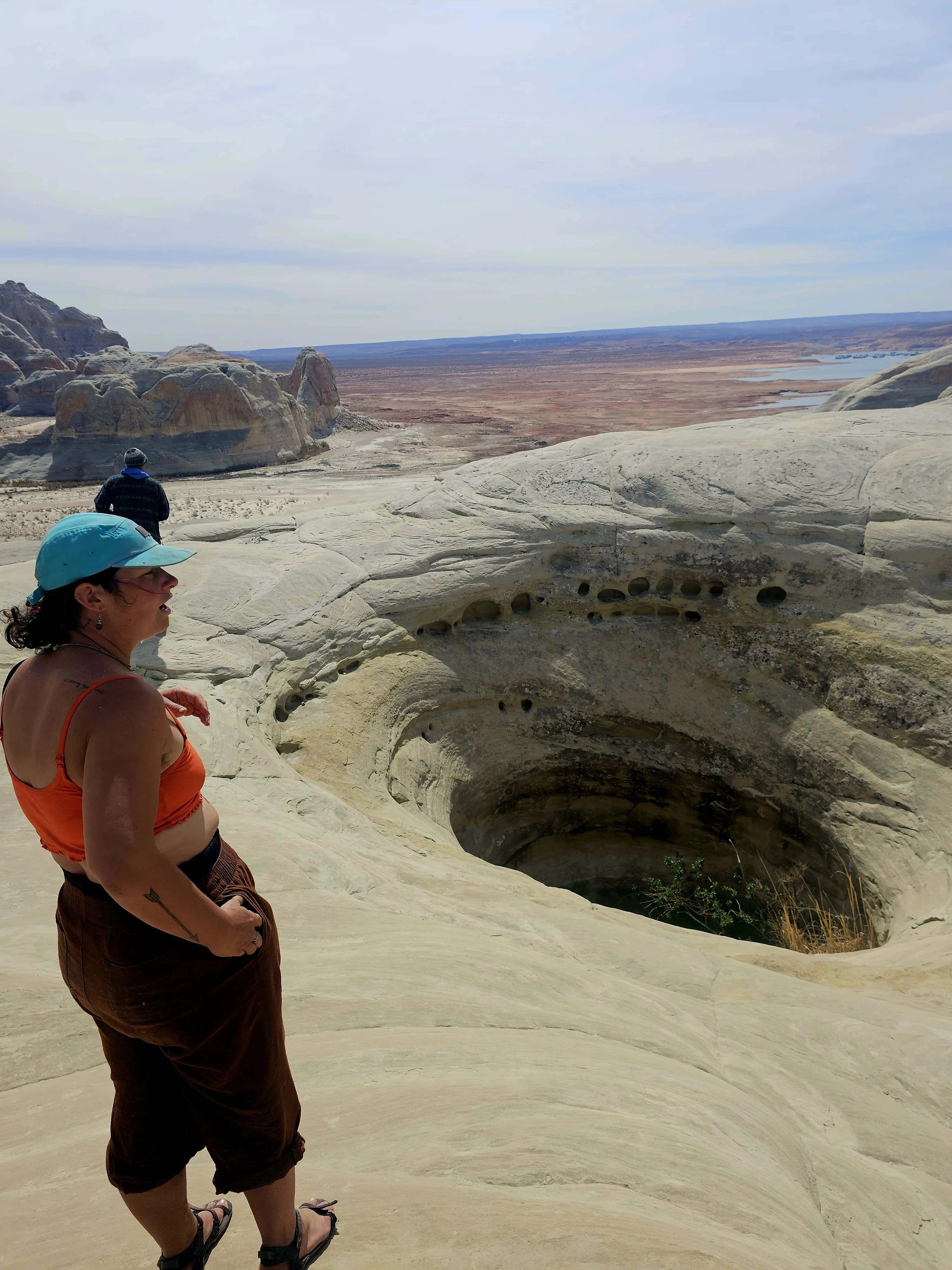
If lake levels are lower than the photos you saw online, that does not make an October outing a bad idea. It may simply mean a longer walk, more exposed sandstone and a better reason to pack light. Our Lake Powell low-water guide explains why current access information matters more than an old itinerary. The landscape is still remarkable, but it rewards people who meet it as it is.
Pack for Sun, Wind and a Cool Return
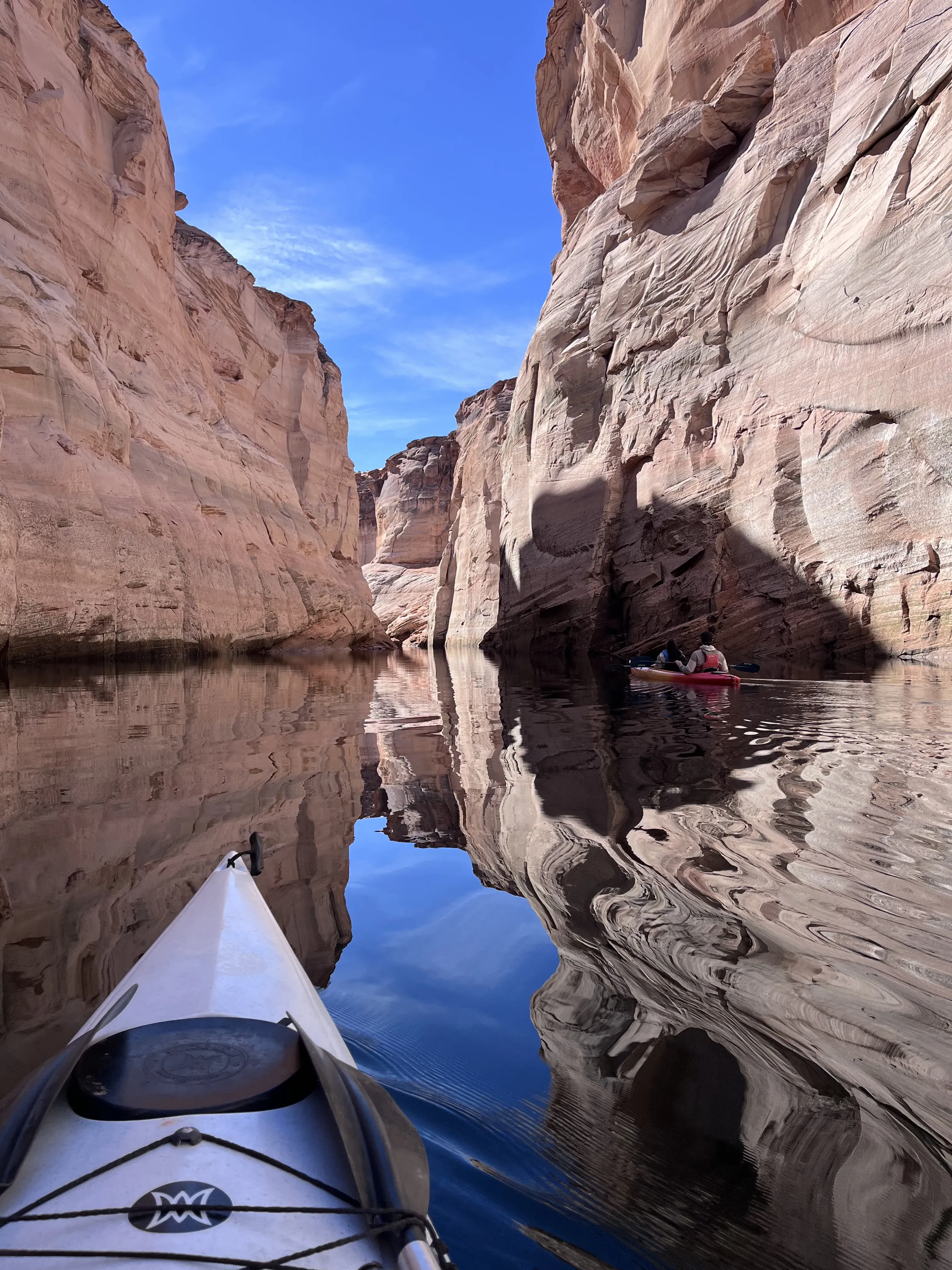
The October packing list is less about heavy gear and more about flexible comfort. Wear quick-dry clothes you can move and paddle in. Bring a long-sleeve sun shirt, sunglasses with a retainer, a hat, secure water-friendly shoes and more drinking water than you think you will need. A dry bag should hold a light wind layer, a snack, any medication and a dry layer for the ride back.
A light fleece or insulated mid-layer can be useful for an early launch or a cool finish, but leave the bulky winter coat in the car unless the actual forecast calls for it. You want to be able to add or remove a layer without turning the kayak into a packing puzzle. Our guide to what to wear kayaking at Lake Powell covers the clothing choices that work through warm sun, splash and a changing breeze.
Life jackets are not optional because the weather feels mild. Wear one that fits, not one that is sitting loose in the boat. For independent paddlers, tell someone your route and expected return time, keep a phone protected in a dry bag and avoid turning a day trip into an equipment experiment. October is a great month for a thoughtful paddle, not a reason to skip the basics.
Choose an October Route by Your Group, Not the Calendar
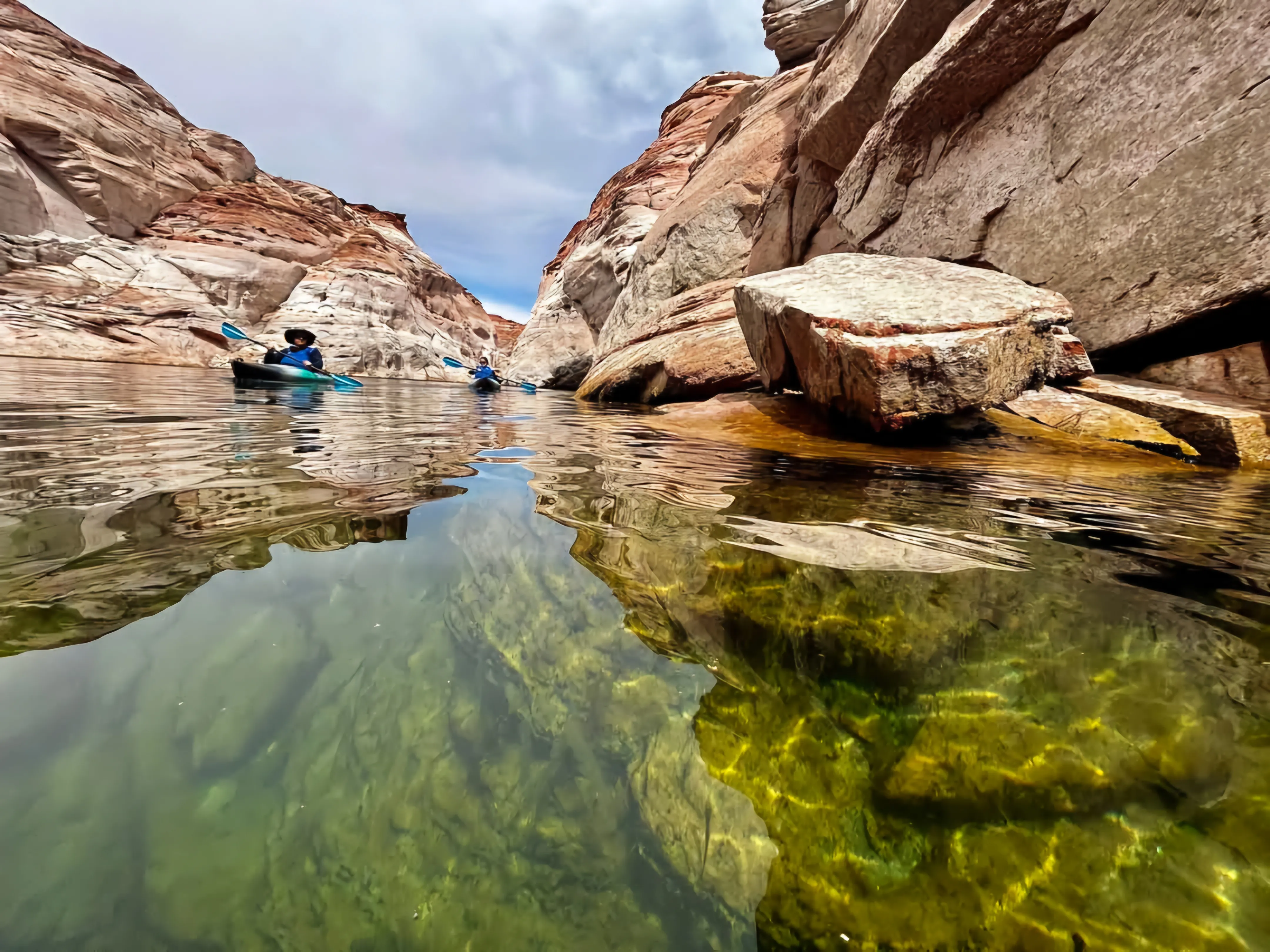
The best Lake Powell October itinerary is not automatically the longest. A short, sheltered paddle with room for a shoreline stop can be more memorable than a big open-water objective that leaves everyone staring at the clock. Start with the people in your group: their comfort in a kayak, their interest in hiking, how much sun they want and whether they are here for quiet time or a physical challenge.
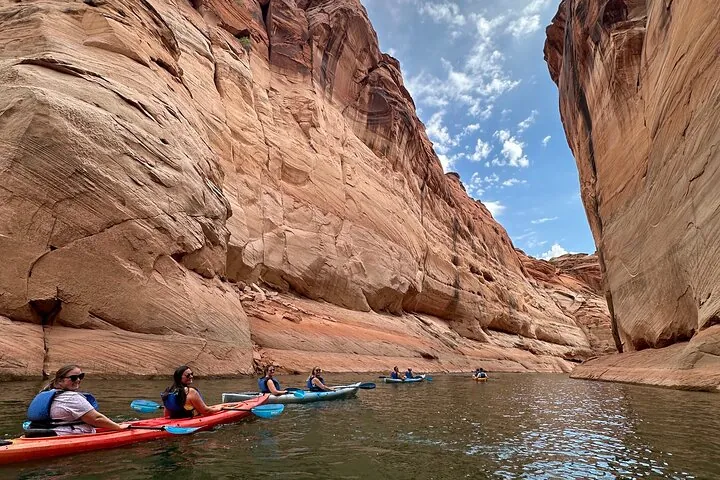
For the signature mix of water and sandstone, the guided Antelope Canyon kayak and hike combines a steady paddle with a walk into canyon country. It is a strong fit for visitors who want a complete Lake Powell day without having to decide how far to go once they are already on the water.
Private routes give smaller groups more flexibility. Seven Wonders of Glen Canyon is the shorter, easier private option when the goal is a calm day with time to look around. The Monkey Wrench Route is better for guests who genuinely want a more active paddle. You can compare the full tour lineup by pace, activity and group type before you decide which kind of October day sounds right.
Guided or Independent: What Changes in Fall
Independent paddling can be a good fit when you have the right equipment, current launch information and confidence making your own weather and route calls. It also means your group is responsible for every small decision: where to put in, how far to go, when to turn and what to do if the wind changes. That is manageable for prepared paddlers, but it is a lot to solve during a short vacation.
A guided outing is often easier for visitors who want the landscape without the logistics. High Desert Paddle Co. provides the kayak, paddle, life jacket, dry bag and pre-launch guidance, then chooses a route and pace that make sense for the group and current conditions. The benefit is not a more complicated itinerary. It is having more attention left for the water, canyon walls and people you came with.
If you are still deciding which kind of experience suits your group, start with the Lake Powell kayak tours overview. Travelers hoping to pair a paddle with a canyon walk can also read whether you can kayak Antelope Canyon before choosing a date.
A Simple October Day Plan
The evening before, check the marine forecast, confirm your meeting or launch plan and lay out your clothing. In the morning, eat something, fill your water bottle and put sun protection on before the ramp. Start earlier when possible, particularly if your group wants a leisurely pace or a walk after the paddle.
On the water, keep the first part of the route easy. Let everyone settle into their boat before you decide how much farther to go. Stop before people are tired, drink water before anyone feels behind and make the turnaround decision while the group still has good energy. Our Lake Powell route guide can help independent paddlers think through route fit, while guided guests can use the time to ask their guide what the conditions are doing that day.
After the paddle, a dry shirt and an extra snack make the return to Page much more comfortable. That final bit of margin matters. October days can feel warm when you launch and surprisingly cool when you finish, especially after a shaded walk or a breezy crossing.
How High Desert Paddle Co. Helps You Make the Most of October
High Desert Paddle Co. is built for travelers who want Lake Powell to feel approachable, not overplanned. We help people choose a route that matches their group, provide the core gear and handle the practical details before launch. That leaves room for the part that brings people to Page in the first place: quiet water, red rock and a day that feels genuinely different from the usual sightseeing stop.
October is especially good for a guided day because the right experience depends on the weather, water and group in front of you. Choose Antelope Canyon for the classic paddle-and-hike day, Seven Wonders for an easier private outing or Monkey Wrench when you want a more active challenge. The goal is simple: a Lake Powell day that feels well chosen from the first paddle stroke to the last.
Frequently asked questions
Is October a good time to visit Lake Powell?+
Yes. October is often a comfortable time for a Lake Powell visit because fall brings milder conditions and fewer crowds than peak summer. Check the current forecast, wind and access information close to your trip because lake conditions can still change.
Can you kayak Lake Powell in October?+
Yes. October can be an excellent month for a Lake Powell kayak day when the route, wind and group fit are right. Bring sun protection, drinking water and a light wind layer, then plan a conservative turnaround point.
What should I wear kayaking at Lake Powell in October?+
Wear quick-dry clothing, sun protection and secure water-friendly shoes. Pack a light wind layer and a warmer layer for an early start or a cool return. Avoid cotton layers that stay damp after splash or sweat.
Is Lake Powell water warm in October?+
Water temperature can vary by location, depth and recent weather. It is best to check a current water-temperature report before you travel and dress for the possibility of splash or a cooler breeze, rather than assuming the water will match the air temperature.
Which Lake Powell kayak tour is best in October?+
The Antelope Canyon kayak and hike suits visitors who want both water and canyon walking. Seven Wonders is the easiest private option, while Monkey Wrench is a better fit for groups seeking more paddling miles. The right choice depends on your group’s comfort, interests and the day’s conditions.