The question we hear from visitors is fair: is Lake Powell still worth visiting when the water is low? Absolutely. The honest answer is that a lower lake changes the kind of day you plan. It can mean a longer walk at a ramp, different access points, more exposed shoreline and a route that asks you to pay closer attention. It does not mean the canyon country has run out of things to show you.
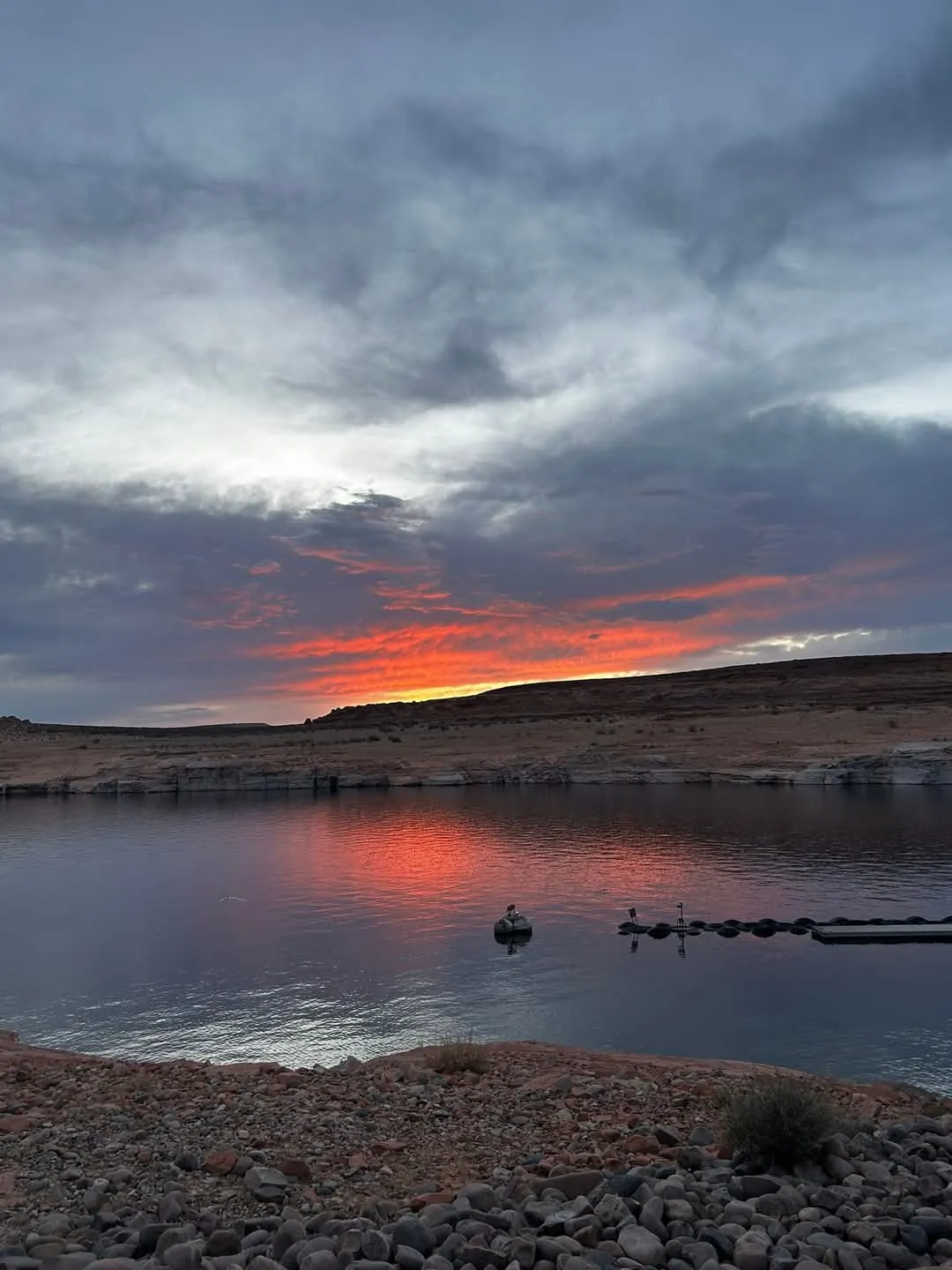
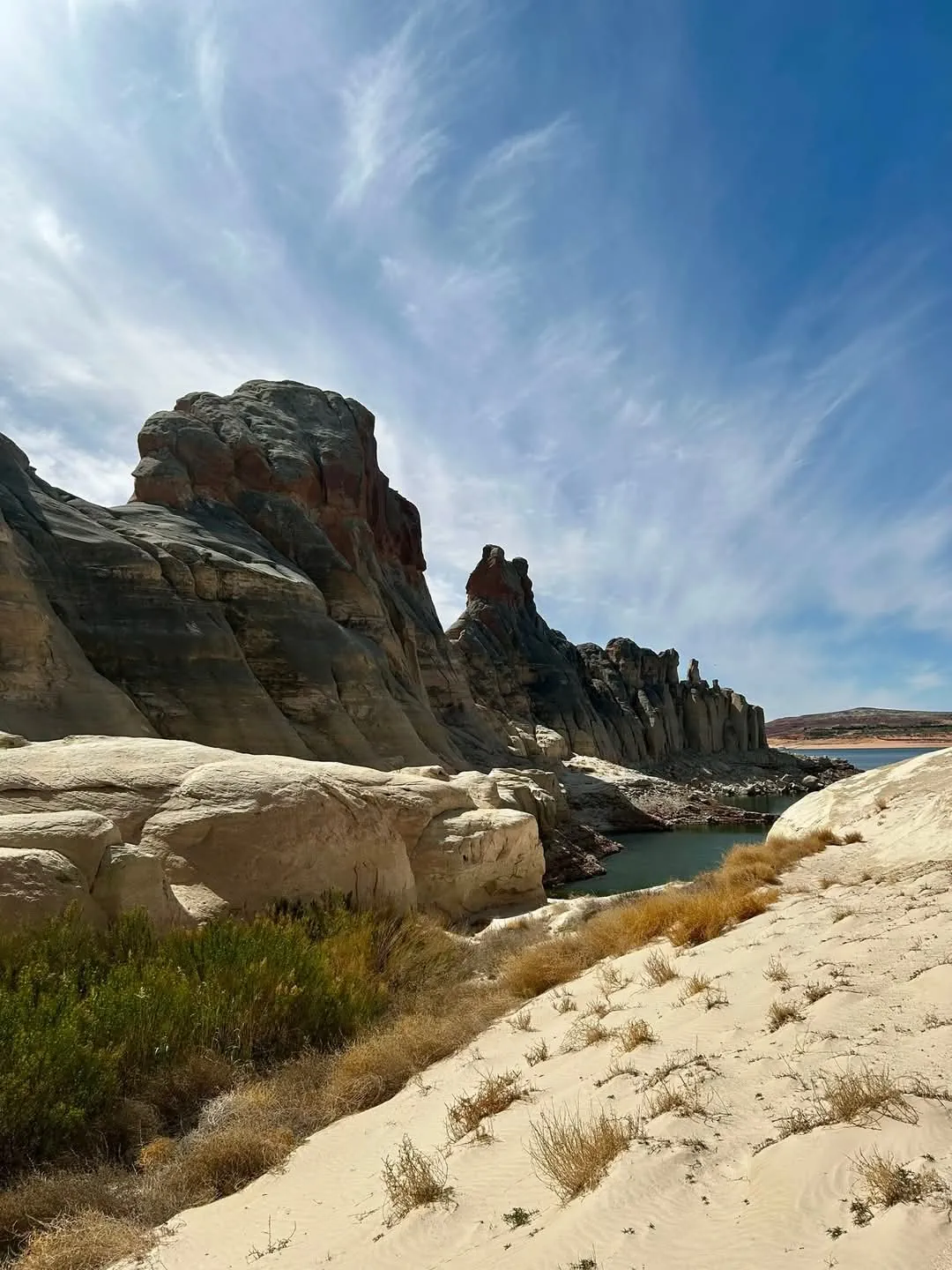
In fact, low water can make a Lake Powell adventure feel more textured. More sandstone is visible. The boundary between water, beach and canyon is easier to read. A paddle can lead into a walk, a shoreline stop or a view that simply was not visible from the same route at a higher elevation. For people who came to move through this landscape rather than race a boat across it, that shift can be a genuine advantage.
This is not a pitch to ignore the conditions. Lake levels affect launches, marinas and navigation, and they deserve real respect. But if you plan around the day that exists now, rather than the one in an old photo, there is still a remarkable amount to see and do at Lake Powell. For many visitors, it is a better kind of adventure: more deliberate, more active and closer to the shape of Glen Canyon.
Low Water Changes Access, Not the Experience
Lake Powell is huge, and its shoreline is always changing. When the elevation drops, ramps can become longer, familiar coves can look different and the distance from parking to water may grow. That matters most for large motorboats, heavy trailers and anyone relying on a particular dock or ramp. Paddlers have a simpler tool kit, but they still need to choose a sensible launch and be ready to carry gear.
The National Park Service’s changing lake-level page is the right place to start before every visit. It tracks current conditions and notes that narrowing channels can bring more congestion, while services such as fuel, walkways and restrooms may vary. Checking it shortly before your trip is far more useful than trusting last summer’s video or a friend’s old route.
For a guided kayak day, the practical change is often modest: wear footwear that can walk on rock or ramp, pack light and expect the guide to adjust the launch plan to current conditions. For independent paddlers, the same principle applies with more responsibility. Confirm the access point, build time into the day and choose a route with a clear turnaround point.
Why Lower Water Can Feel More Adventurous
A full lake can be beautiful in a broad, blue, open-water way. A lower lake often gives you a different relationship with the terrain. You notice the shelves and curves of the canyon walls. You see more of the pale sandstone bench that sits between the water and the high desert. You have more reasons to stop, step out and look around instead of treating the lake as a highway.
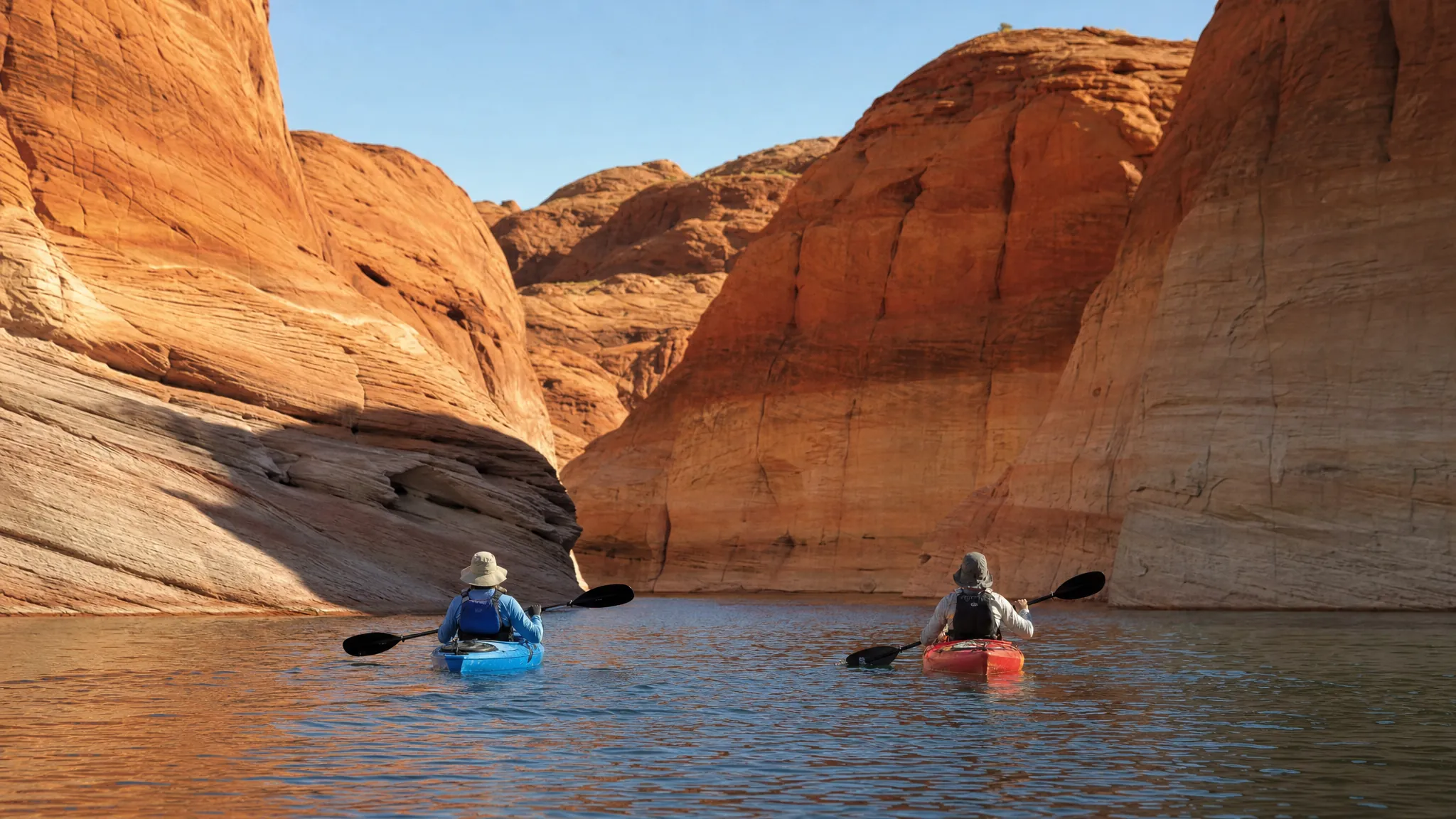
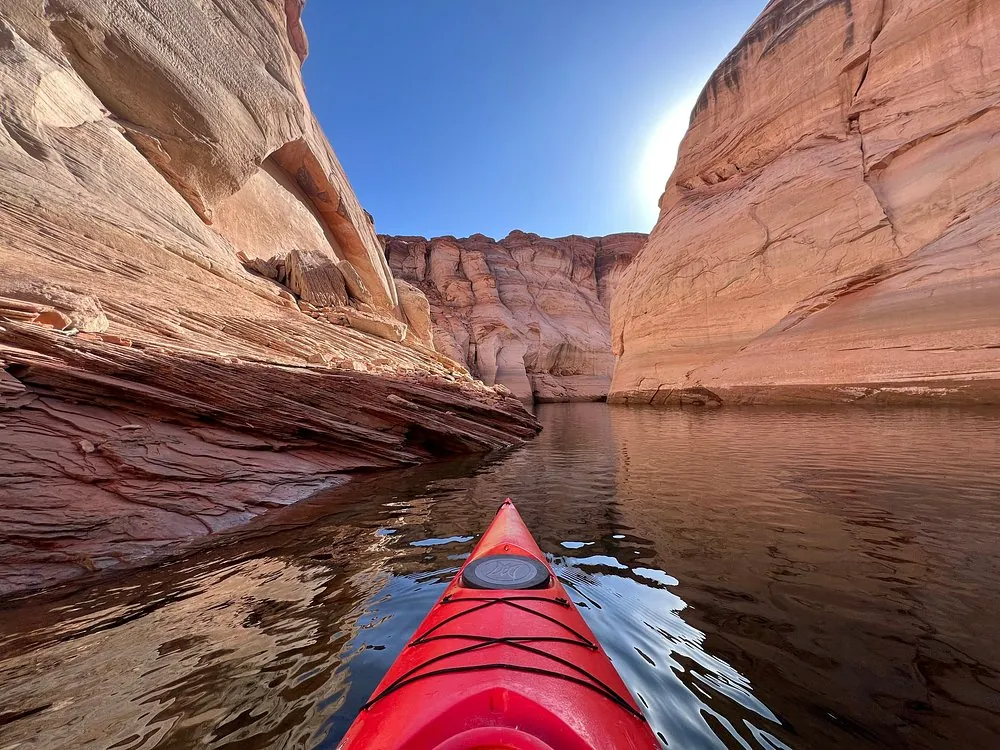
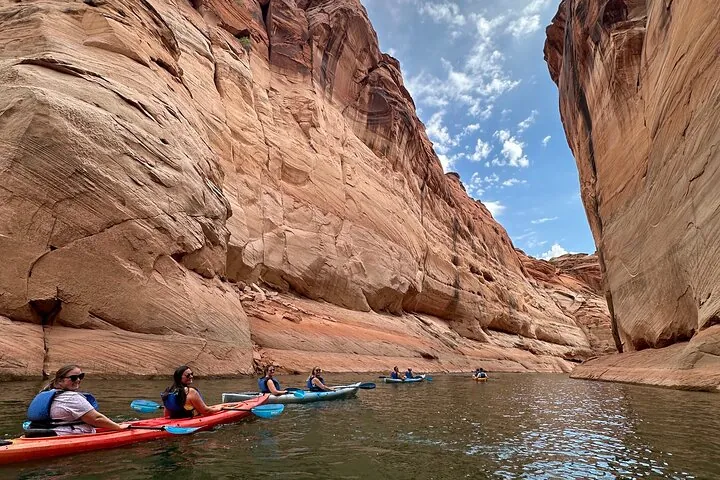
That is especially true on a kayak. You move quietly enough to hear the water touch the hull and the wind move along the walls. The landscape arrives at human scale. A bend in the canyon becomes a decision, a beach becomes a break and a small side drainage becomes something worth exploring with your eyes open. The reward is not a bigger checklist. It is a more memorable day.
Low water also rewards curiosity. A route may include a short walk across warm sandstone, a closer look at mineral patterns in the walls or a pause where the transition from lake to desert feels especially clear. Those are not substitute activities. They are part of what makes a Lake Powell paddle more than a ride.
This is why the best low-water trips are not built around a promise that nothing has changed. They are built around the things that change well: an easy paddle with time for a shoreline stop, a route that combines water and hiking, or a private day where the group can set a thoughtful pace. The less you try to recreate an old itinerary, the more space you have to enjoy the one in front of you.
The Best Things To Do at Lake Powell When Water Is Low
Start with a paddle-and-walk approach. Kayaking is one of the cleanest ways to experience shifting shoreline because you can keep the outing focused on a reachable stretch of water and still take time to explore the edge of the canyon. Our Lake Powell kayaking guide is a useful primer on how wind, distance and route choice shape the day.
Antelope Canyon is the classic choice for visitors who want both water and sandstone in one outing. The route changes with conditions, but the appeal stays the same: paddle toward canyon walls, then continue on foot where the landscape invites a slower look. A guided Antelope Canyon kayak and hike keeps the logistics clear so you can spend your attention on the place itself.
A private outing can be even better for groups who want to make the walking and stopping part of the experience. Seven Wonders of Glen Canyon is our shortest, easiest private option, while Monkey Wrench is built for guests who genuinely want more paddling miles. Neither requires pretending conditions are static. The route is chosen for the day, the group and the water you actually find.
High Desert Paddle Co. trips are built around guided paddling and canyon exploration, not swimming. The National Park Service prohibits swimming at marinas and launch areas, so guests should follow posted rules and their guide’s direction throughout the day.
Plan For a Different Launch Day
This is where a little preparation earns its keep. Pack the dry bag before you reach the ramp. Keep water, sunscreen, medication, a snack and a wind layer easy to reach. Wear shoes with a sole you trust on wet concrete and uneven sandstone. Carry only what you are genuinely willing to carry between the car and the water.
If you are launching independently around Wahweap, check the specific ramp rather than assuming it works the way it did on a previous trip. The National Park Service notes that the Wahweap Main Launch Ramp is available to motorized vessels above a stated elevation and that paddlecraft may launch at their own risk. Its guidance is a reminder that ramp status and shoreline distance are practical planning details, not fine print.
Arrive earlier than you think you need to. A calm start gives you time to fit the life jacket, orient the group, check the weather and decide what will make you turn around. It also means you are less likely to let a crowded ramp or a changing breeze push you into a rushed decision.
A guided group has another advantage here: the first ten minutes are not spent debating where to put in or how far is too far. The route, safety talk and gear fit happen before the water, leaving everyone free to settle into the experience instead of trying to catch up with it. That is a small difference at the start and a big difference by the end of the day.
Water Level Is Only One Part of the Plan
It is easy to focus on the headline number. The Bureau of Reclamation’s weekly update publishes the current Lake Powell elevation, storage and short-term change, which is useful context for a trip. But the number alone does not tell you whether your group should be on the water at noon, whether a wind is building across a bay or whether the route is too ambitious for a first-time paddler.
Weather, wind, heat, boat traffic and everyone’s energy level matter just as much. The National Park Service advises visitors to check a forecast because afternoon storms can rise from calm mornings. It also warns that there are unmarked underwater hazards and that lake levels create a different shoreline across the seasons. A good day is built around those facts, not around proving you can cover the most ground.
The most useful rule is simple: plan a smaller adventure than your best-case imagination. Give yourself room to stop, drink water, look up and turn back early. Lake Powell is not going anywhere, and the best stories rarely come from the part where a group pushes too far.
What To Bring for a Low-Water Lake Powell Day
Bring the same core gear you would want on any desert-water outing: a properly fitted life jacket, plenty of water, sun protection, secure water-ready footwear, a dry bag, a light wind layer and a dry change of clothes for the car. Low water adds one more priority: make every item easy to carry. A small, well-packed day kit feels much better than a pile of loose gear when the shoreline is farther from the parking lot.
Dress for the lake and the trail. Quick-dry clothing, a long-sleeve sun shirt and shoes that can handle both splash and rock will make the day easier from the first launch to the last walk back. Our guide to what to wear kayaking at Lake Powell breaks down the seasonal details, including how to handle heat, wind and cooler mornings.
Use a map, tell someone the plan and keep the group together. The water may be lower, but the desert still asks for the same basics: patience, hydration and enough humility to change course when the conditions say it is time.
If you are travelling with kids or first-time paddlers, let comfort set the pace. A shorter route with a good break is more rewarding than a long route where everyone is counting the minutes back. Pack a snack, protect exposed skin and make the return time part of the plan, not an afterthought. Adventure works better when the whole group still has something left in the tank to enjoy the last bend. Low water is an invitation to slow down, look closer and let the canyon set the rhythm.
How High Desert Paddle Co. Helps You Explore
Low water should not make a Lake Powell visit feel like a puzzle you have to solve alone. High Desert Paddle Co. plans guided outings around current access, the day’s weather and the pace of the group. We provide the kayak, paddle, life jacket, dry bag and a clear briefing before launch, then help you experience the landscape without turning your holiday into a logistics exercise.
Choose the Antelope Canyon route for the signature combination of paddling and canyon walking. Choose Seven Wonders for a shorter private day, or Monkey Wrench when you want to earn the miles. You can also browse the full tour line-up to find the route that fits your group. The aim is not to sell a fixed version of Lake Powell. It is to help you have a great day on the Lake Powell that is here now.
Frequently asked questions
Is Lake Powell still worth visiting when the water is low?+
Yes. Low water changes access and route planning, but Lake Powell still offers paddling, guided canyon walks, shoreline exploration and boating. Check current conditions before you go and choose an outing that suits the day.
Can you still kayak at Lake Powell when the water is low?+
Yes, kayaking remains a strong way to experience Lake Powell at lower levels. The key is confirming your launch access, carrying gear efficiently, watching weather and choosing a conservative route. Guided trips are an easy option for visitors who want current local planning included.
What changes at Lake Powell during low water?+
Launch ramps, shoreline distance, marina services, navigation and the appearance of coves can all change as the level shifts. Lower water can expose more sandstone and create more opportunity to combine a paddle with a walk, but it also makes current conditions more important.
Where can I check Lake Powell water levels before a trip?+
Check the National Park Service’s changing lake-level page for visitor access information and the Bureau of Reclamation’s current water data for elevation and storage context. Review both shortly before you travel because conditions can change.
Is a guided Lake Powell kayak tour a good idea at low water?+
A guided kayak tour is a practical choice at any level, especially at low water. Your guide can plan around the current launch, route, weather and group pace, while you focus on the canyon, water and time outside.