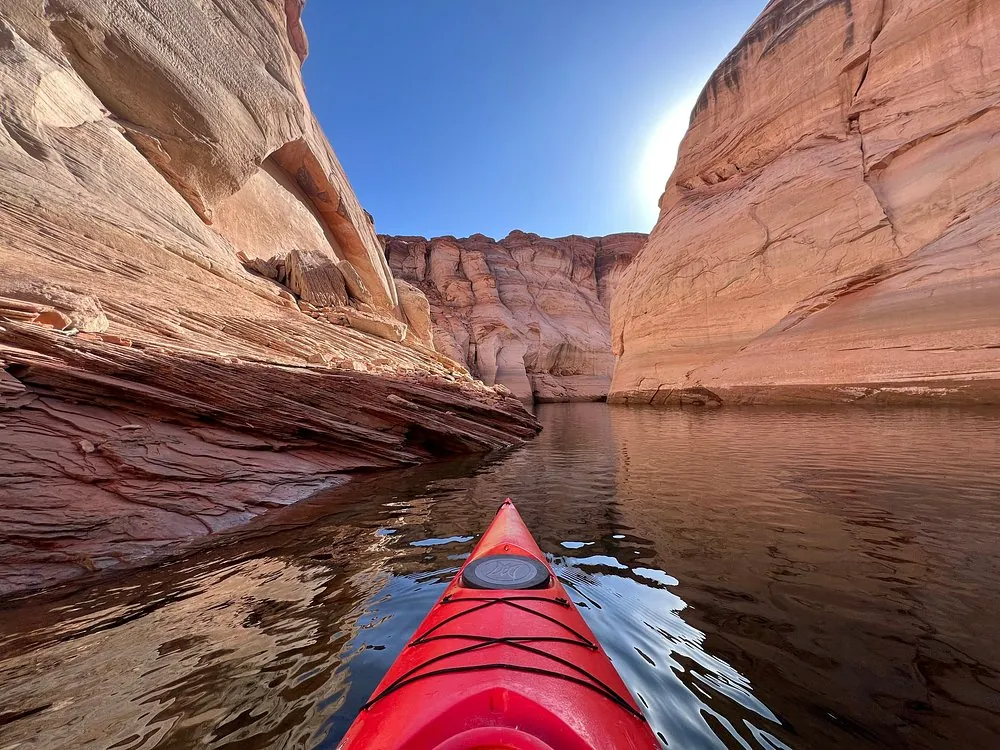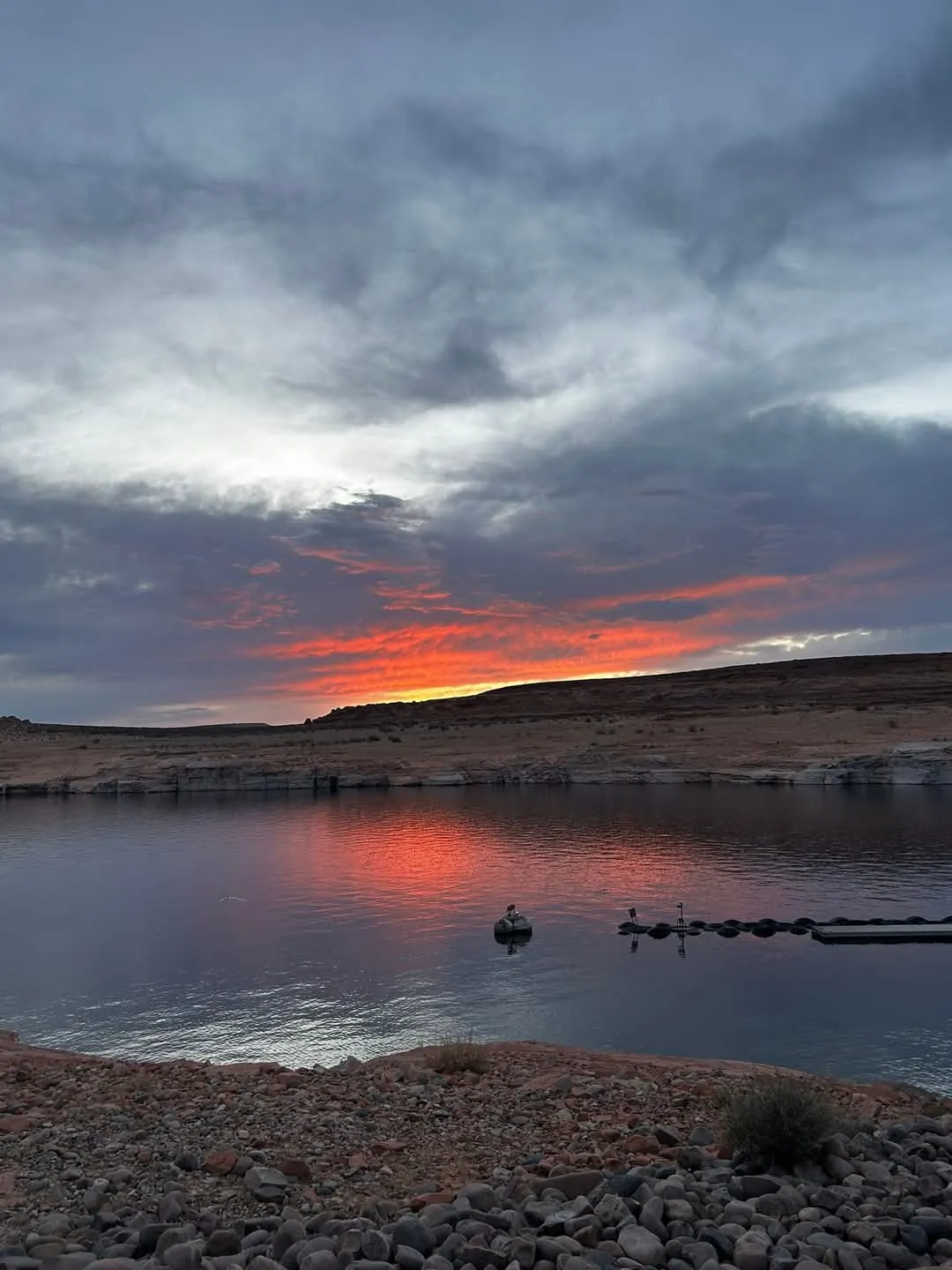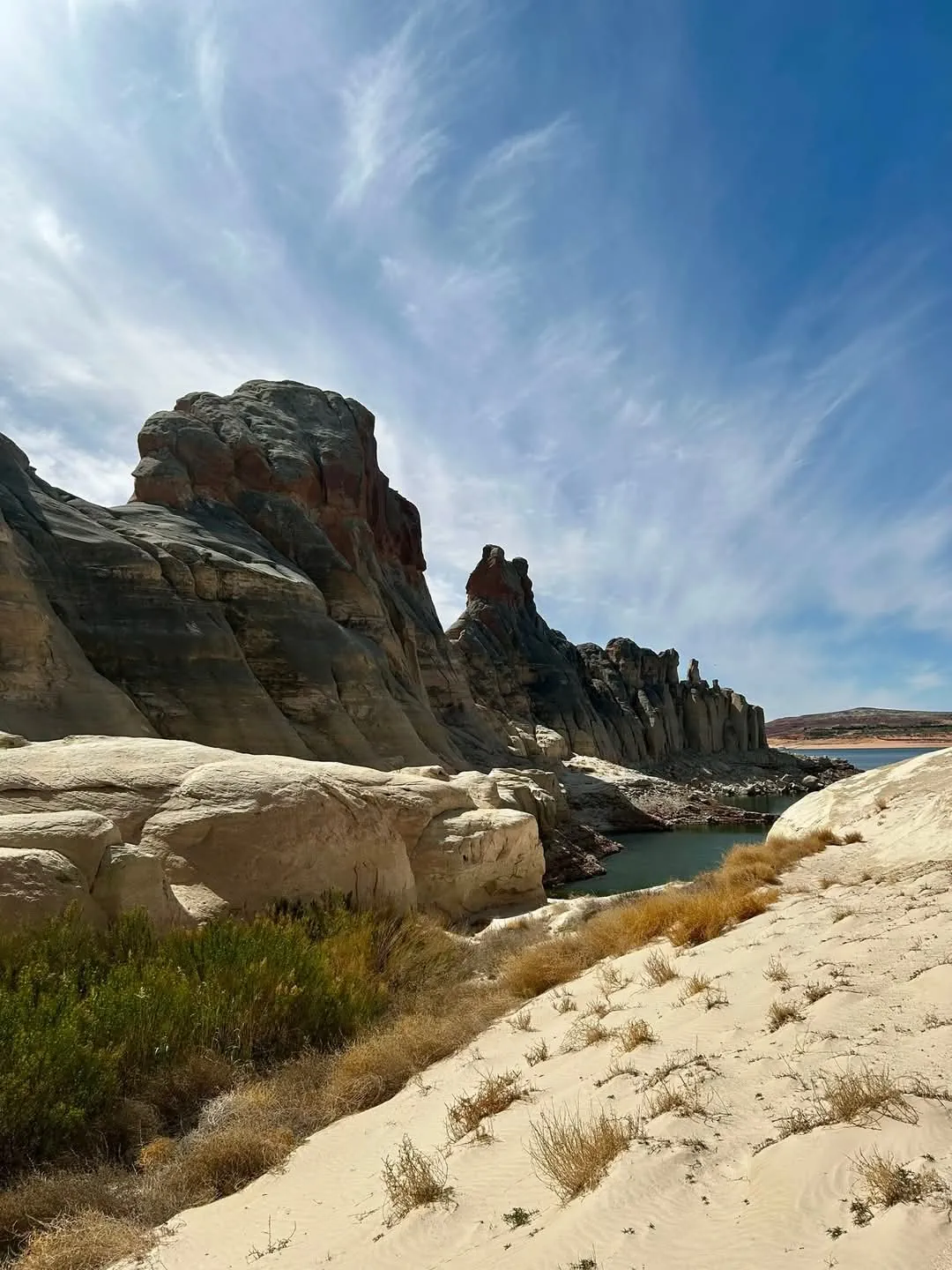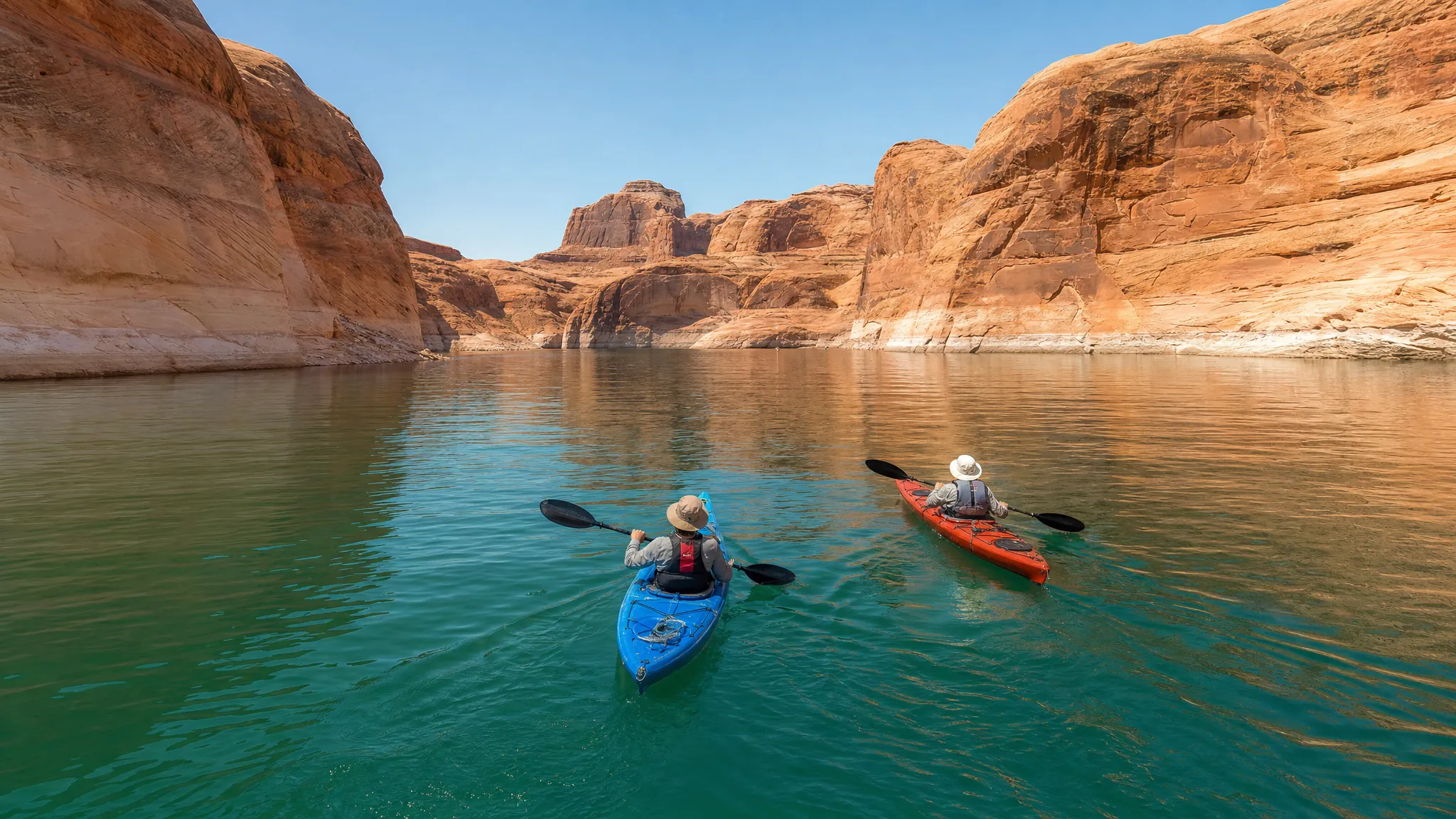
Lake Powell kayaking can be as simple as a quiet first paddle near Page or as involved as a long day exploring a remote arm of the lake. The difference is not just the kayak. It is the plan you make before you reach the ramp: where you will launch, how much open water your group can handle, what the wind is doing and whether everyone wants the same kind of day.
That is good news for first-time visitors. You do not need to memorize every cove or arrive with a wilderness-expedition kit to have a memorable paddle. You do need to treat Lake Powell like the large, changing reservoir it is. A little preparation lets you spend more time looking at the water and sandstone, and less time solving avoidable problems at the launch.
This guide is for visitors based near Page who want a realistic, enjoyable Lake Powell day. It covers the route choice, conditions, gear and group decisions that matter most, whether you join a guided trip or bring your own kayak.
Why Lake Powell Feels Different From a Typical Lake
Lake Powell rewards paddlers with scale. You can move from broad open water into quieter coves, watch sandstone walls change color with the light and reach places that do not feel like a roadside stop. That variety is the reason people come, but it also means a route that looks casual on a map can involve wind, boat traffic, heat or more distance than expected.
The National Park Service notes that paddlers can find smoother day trips around Wahweap and Lone Rock, while longer outings can reach destinations such as Warm Creek Bay. It also notes that busy beaches and motorized vessels are part of the Lake Powell picture. In other words, your best route is not a universal answer. It is the one that suits the conditions, your launch point and the least experienced person in your group.
Start with the kind of experience you want, then work backward. A short scenic outing, a canyon-and-hike day and a longer endurance paddle all ask different things of a group. The useful question is not, 'What is the most famous place?' It is, 'What kind of day will still feel good when everyone is halfway through it?'
Choose a Route That Matches Your Group
For many visitors, the signature option is an Antelope Canyon kayak and hike. It combines a real paddle from the Antelope Point side of the lake with a guided walk when the water ends. That makes it a strong choice for people who want a half-day adventure, have little paddling experience and would rather not spend the morning sorting out boats, launch access and a turnaround point.
If your group wants a shorter, more flexible private outing, the Seven Wonders route is built around an easier pace in the Wahweap area. It is the better fit when the goal is time on the water, sandstone scenery and room to stop, rather than putting in the most miles. Families and mixed-experience groups usually enjoy the day more when the pace matches their comfort instead of the boldest itinerary in the car.
The Monkey Wrench Route is the different choice. At roughly eight miles round trip toward Glen Canyon Dam, it is for active visitors who want the paddle itself to be a meaningful part of the day. It is not a route to choose because it sounds impressive. It is a route to choose when the group genuinely wants the extra movement and has agreed on that before launch.
If you are still comparing the character of these routes, the Lake Powell route guide breaks down the water-and-trail experience, the easier private option and the more active option side by side. Clear expectations protect a vacation day better than a heroic last-minute plan.
Read the Water Before You Commit to the Route
Conditions should make the final call. Lake level changes affect ramp access, shoreline distance and the way a familiar cove or channel works. The National Park Service's changing lake-level page says that shoreline changes can affect launch-ramp usability throughout the year, and it specifically asks visitors to check the status of their preferred launch before heading to the lake.
That is not a reason to overthink a day outside. It is a reason to use current information instead of a travel video from several seasons ago. Look at the lake-level and conditions pages the night before, then check again in the morning. Confirm where you will park, how you will carry your boat and whether the water route still makes sense for the time you have.
Wind matters just as much as the launch. A light breeze at the ramp can become a more tiring return across open water, particularly when the group is warm, thirsty or behind schedule. Build a conservative turnaround point into the plan. You can always enjoy one more cove on the way back. You cannot make the lake smaller by deciding you are tired.
The local weather guidance is worth checking, not just a city forecast. Glen Canyon can be extremely hot in summer, spring can bring extended windy periods and summer rain can arrive quickly. A comfortable Lake Powell day starts with the forecast, but it stays comfortable because the group is willing to change the plan when the water says otherwise.
Pack for the Lake, Not Just the Forecast
The essentials are simple: a properly fitted life jacket, water, sun protection, secure footwear, a dry bag and a layer for wind. The exact clothes change with the season, but the principle does not. Wear items that can get wet, keep the sun off your skin and let you move easily in a seated position.
In hot weather, a lightweight long-sleeve sun shirt, hat and sunglasses with a strap are usually more useful than trying to reapply sunscreen every time you stop. Bring more water than you expect to want. The National Park Service describes summer in Glen Canyon as extremely hot with little shade, and says temperatures can reach 110 degrees F in June and July.
A dry change of clothes in the car is one of the easiest ways to make the end of a paddle better. Add a light wind shell, even when the day begins hot. After a splash, shade or breezy return, a small layer feels more valuable than another gadget.
For a more complete checklist, use the guide to what to wear kayaking at Lake Powell. It covers clothing, footwear and the small dry-bag choices that make a guided paddle or independent outing more comfortable.
Make the Launch Calm and Deliberate
The launch is where a good plan becomes a good day. Pack the dry bag before you reach the ramp. Keep water, sunscreen, medication and a snack where you can reach them. Put your phone, keys and camera inside their own protective pouch, then close the bag properly. Loose gear and a crowded ramp are a poor combination.
If you are bringing your own kayak, arrive early enough to fit the life jacket, check the boat, talk through the route and agree on the first stop before anyone is trying to carry a kayak down the ramp. The National Park Service also asks visitors to prepare their boats in a nearby parking lot when ramps are busy, which keeps the launch moving for everyone.
Know your location and your fallback. The Lake Powell marinas page lists the Page-area services around Wahweap and Antelope Point, but availability can change. A responsible plan includes where you will go if the ramp, parking or water conditions are not what you expected.
There is no prize for launching first. A few calm minutes at the start are cheaper than discovering halfway across a bay that one person is cold, missing water or unsure where the group is headed.
Guided or Independent: Choose the Day You Actually Want
Independent kayaking can be a great fit for paddlers who already have reliable equipment, know how to assess conditions and enjoy handling the logistics. It also means the group owns every decision: launch access, boat setup, safety gear, weather, navigation, pacing, water and the point where it is time to turn around.
A guided outing is a better match when you want your first Lake Powell paddle to feel like a vacation, not a project plan. A guide handles the boat setup, safety briefing and local route judgment, while you focus on paddling and noticing the landscape. That is especially useful for travellers with limited time, mixed-experience groups and visitors who want to pair the lake with a canyon hike.
The choice is not about proving anything. It is about matching the responsibility to the group. Someone who has paddled plenty of protected lakes may still prefer a guide for a first visit to Lake Powell. Someone with their own gear may be perfectly happy on a calm, short route after checking access and conditions. Good judgment is knowing which version of the day you want.
A First-Time Paddler's Simple Plan
Keep your first Lake Powell paddle smaller than the story you want to tell afterward. Choose a route with a clear launch, an obvious turnaround point and enough time to stop before everyone is tired. Wear the life jacket from the start. Drink water before you feel thirsty. Keep your group close enough to talk without yelling.
Do not chase a particular photo or try to force the longest route into a short day. Light changes. Water changes. The best moments often arrive after the group settles into an easy rhythm and stops trying to rush the landscape.
For a first-time kayak-and-hike day, the Antelope Canyon kayak and hike offers a planned route, equipment and a guide. Visitors looking for another pace can compare the Lake Powell kayak tour options or use the full tour line-up to choose a day that fits their group.
How High Desert Paddle Co. Helps
High Desert Paddle Co. is built for visitors who want the Lake Powell experience to feel personal, not improvised. We provide the boat, paddle, life jacket, dry bag and clear guidance before launch, then shape the day around the route and pace your group is there to enjoy.
Choose Antelope Canyon for the classic paddle-and-hike experience. Choose Seven Wonders for an easier private day. Choose Monkey Wrench when more miles are genuinely part of the fun. The goal is simple: help you leave with a Lake Powell story that fits the day you wanted, rather than the one a map made look easy.
Frequently asked questions
Is Lake Powell good for beginner kayaking?+
Lake Powell can work well for beginners when the route, weather and group expectations are a good fit. Choose a manageable distance, wear a properly fitted life jacket and be conservative about wind and heat. A guided trip is often the easiest first experience because equipment, instruction and route planning are handled for you.
Where should I launch a kayak near Page, Arizona?+
Wahweap and Antelope Point are major Page-area access points, but ramp and parking conditions can change with lake levels. Check the National Park Service's current conditions and lake-level information shortly before your visit, rather than relying on older trip reports.
What should I bring kayaking on Lake Powell?+
Bring water, sun protection, a fitted life jacket, secure water-ready footwear, a dry bag, a wind layer and any personal medication. A dry change of clothes in the car is also a smart choice after a splash, a breezy return or a cooler early start.
Is it better to kayak Lake Powell in the morning?+
Morning can be a comfortable choice in summer because the heat is lower and the water may be calmer, but it is not a guarantee. Check the local forecast and current conditions, then plan a conservative turnaround time instead of assuming the lake will stay the same all day.
Do I need a guide to kayak Lake Powell?+
You do not always need a guide, but a guided trip is a strong choice for first-time paddlers, visitors without equipment and groups that want local route judgment included. Independent paddlers should be ready to manage launch access, weather, safety gear, navigation and conservative route decisions themselves.