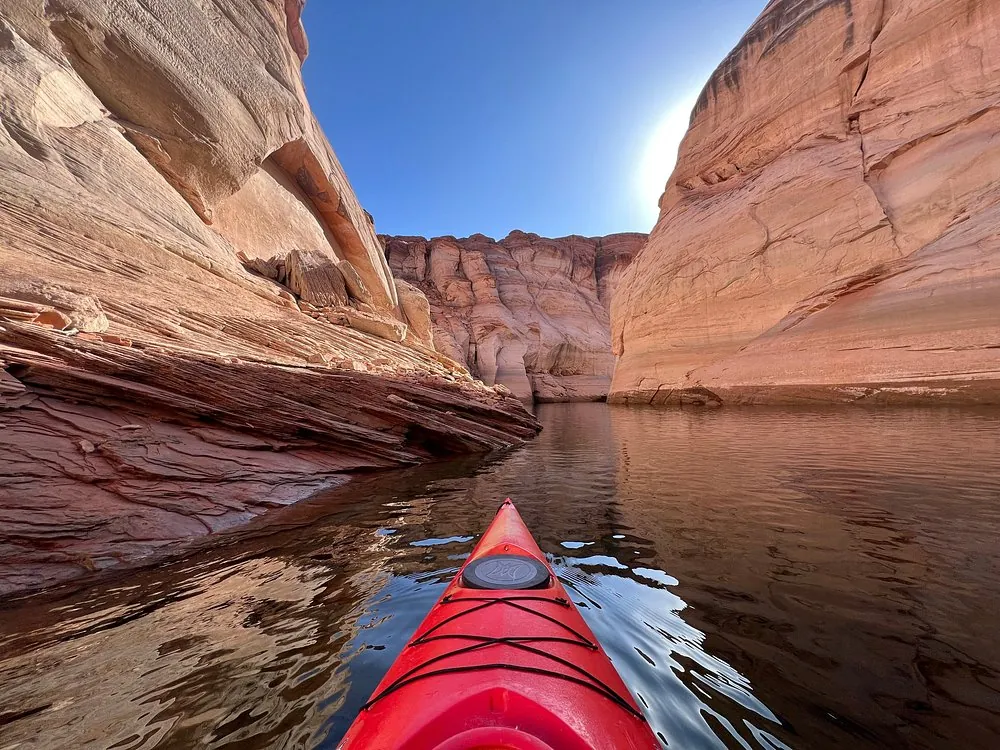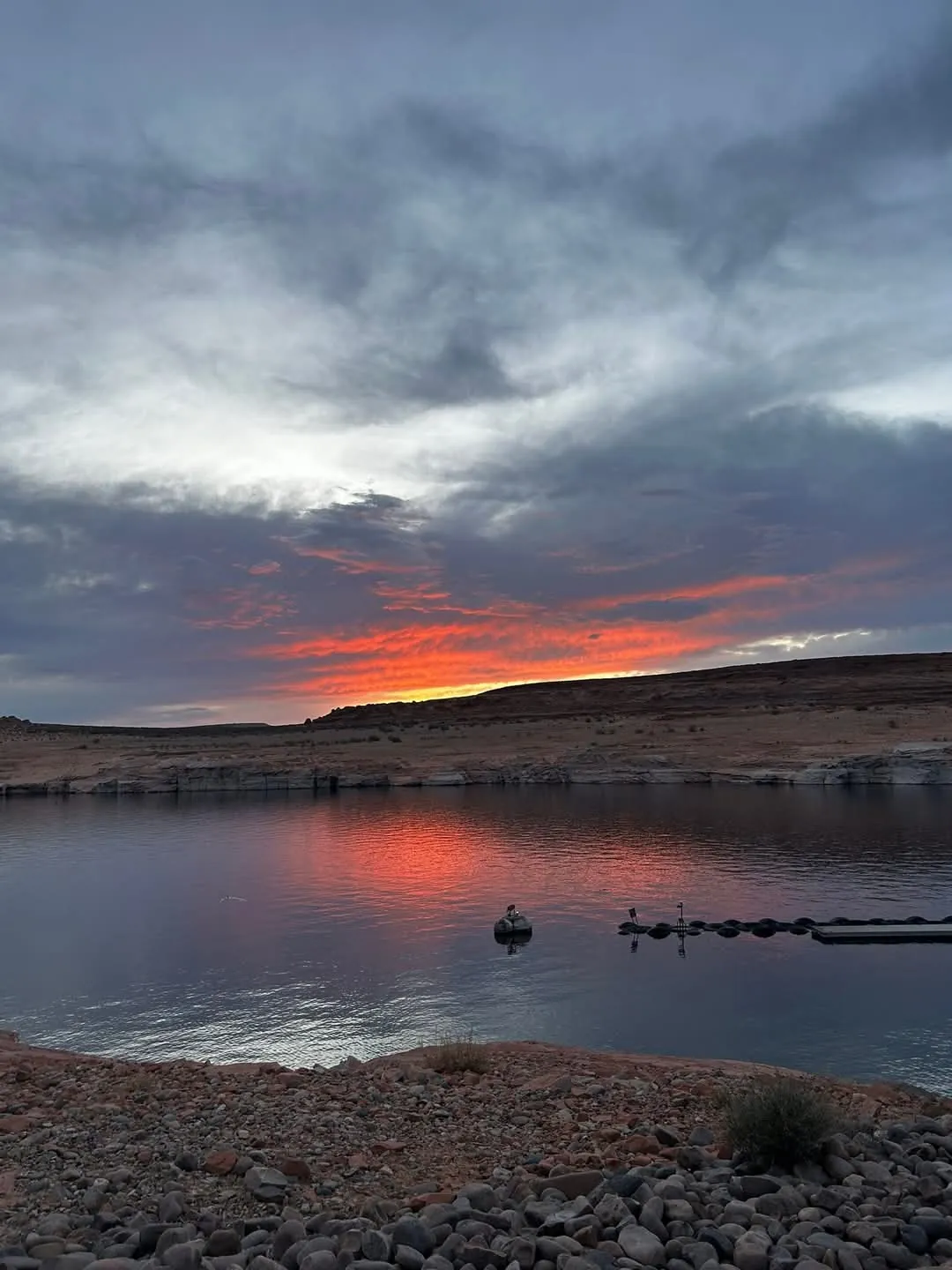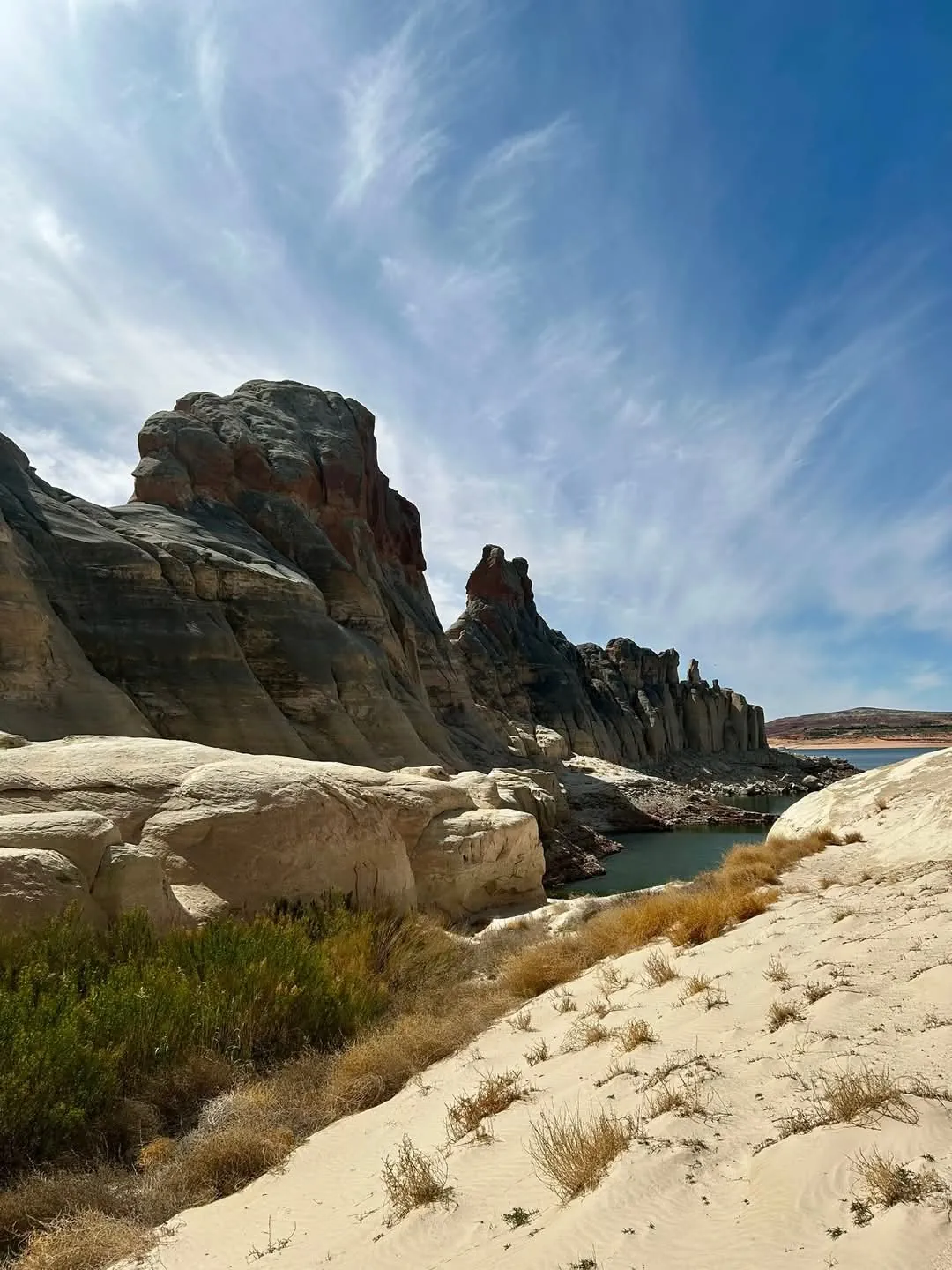
March at Lake Powell is a change-of-season month, not a reliable rehearsal for summer. The days are longer, the sun has more warmth and spring travel begins to pick up around Page. A calm morning can feel glorious after winter. Yet the lake water is still cold, wind can change the character of an open reach quickly and a sunny launch ramp does not tell the whole story of an afternoon on the water.
That mix is exactly what makes March worth planning carefully. Visitors who build a flexible day can enjoy bright sandstone, quieter coves and a satisfying early-season paddle without treating the trip as a test of mileage. This guide covers what to check before travel, how to dress, how to choose a route and when a guided experience is the more relaxed choice.
What March Feels Like at Lake Powell
March usually feels like an opening rather than a finished arrival. The National Park Service weather page is the best starting point for current forecasts and historical Glen Canyon conditions. Check it close to your trip, then think beyond the daily high. A temperature reported for Page or a marina can feel very different on exposed water, beside cold rock in shade or after a splash.
More daylight gives visitors a little more room to pace the day, but it should not become permission to overextend the route. Morning air can still be cold, afternoon wind can build and the water does not warm at the same speed as the shoreline. The comfortable March plan is the one that has a clear turnaround point, time for a snack and a warm layer, and enough daylight left to return without rushing.
If you are comparing the shoulder season, our February Lake Powell guide explains the colder lead-in to spring, while the January guide is useful for the most conservative version of a winter lake day. March is often more inviting, but the habits that make winter paddling sensible still matter.
Check Wind Before You Commit to the Water
For March paddlers, wind deserves as much attention as temperature. A general forecast may look pleasant while the lake forecast shows a breeze that will make an exposed crossing tiring or choppy. Before an independent trip, check the Lake Powell marine forecast for the hours you expect to be out, not just the conditions at breakfast. Check again near launch, because the lake in front of you gets the final say.
The National Park Service's kayak guidance emphasizes preparation, wearing a life jacket and choosing a route that suits both the conditions and the group. In practice, that means staying near shore where possible, avoiding a long out-and-back across open water and resisting the urge to push on because the destination looks close on a map. If the breeze is already stronger than expected, choose a protected outing, a shorter paddle or a land-based plan.
Turning a plan around early is not wasted vacation time. It protects the part people actually came for, a beautiful day in the canyon. A warm drink in Page and an overlook can be a better story than a difficult return in building chop.

Plan for Cold Water Even on a Warm Day
March sun can make it easy to forget that Lake Powell water remains cold. The practical question is not whether you expect to swim. It is whether everyone in the group would stay comfortable and capable after an accidental splash, a windy pause or time spent helping another paddler. Cold hands make simple tasks harder, and wet clothing loses comfort quickly once the boat is moving again.
Wear a properly fitted life jacket from launch to return. Dress in quick-drying layers, add an insulating layer you can reach easily, and pack a wind-resistant shell. Cotton is a poor choice because it stays damp and cold. Secure water-friendly shoes are useful on a wet ramp, sandy shoreline and slick sandstone alike. Our guide to what to wear kayaking at Lake Powell offers a fuller checklist for clothing, footwear, sun protection and dry-bag basics.
Bring water, sunscreen, sunglasses and a hat even when the day begins cool. High-desert sun and dry air can catch visitors out in spring, especially when the focus is on staying warm. The useful approach is to dress for both sun and a possible splash, then adjust layers before anyone is uncomfortable.
Choose a March Route With Margin
A good March route is not the furthest point your group could reach on a perfect day. It is a route that leaves room for a changing forecast, slower paddlers, a scenic stop and the return. Favor sheltered water, a simple shoreline turnaround and a distance everyone can manage without treating the last mile as a race. A smaller route often gives people more time to look around, which is why they came in the first place.
The National Park Service recommends preparing for conditions and staying alert to the lake environment. A simple route plan should include the launch point, a turnaround time and an alternative if the water looks rough. Tell someone where you are headed and when you expect to be back if you are going independently. Keep the group together around open water and make the decision to turn before fatigue makes it feel like a debate.
Route access can change with the lake level too. The walk from ramp to water, the shoreline shape and the best spot to stage boats may not match an older video or a saved trip plan. Check current lake-level information near travel, pack before you reach the ramp and use footwear that can handle the approach. Our Lake Powell route guide can help you think through the kind of day you want before choosing an outing.
Build a Dry Bag for the Part of the Day That Changes
A useful March dry bag is not about carrying every possible item. It is about keeping the items that restore comfort where you can reach them. Put a warm dry layer and wind shell near the top, along with water, a snack, phone protection, basic first aid and any necessary medication. A complete dry change of clothes belongs in the car for the drive back to Page.
Bring more water than the temperature suggests. Steady paddling, wind and dry desert air can dehydrate a group even when no one feels hot. Eat before launching, and carry a snack that is easy to manage with cool hands. If a group is headed farther from the ramp or has mixed experience levels, use a larger safety margin instead of trying to solve every problem from the middle of the lake.
Water temperature is part of that margin too. Read our Lake Powell water-temperature guide before treating a mild air temperature as the whole safety picture. Conditions are not a reason to abandon a good day, they are the information that helps you choose its best version.
When a Guided March Paddle Makes Sense
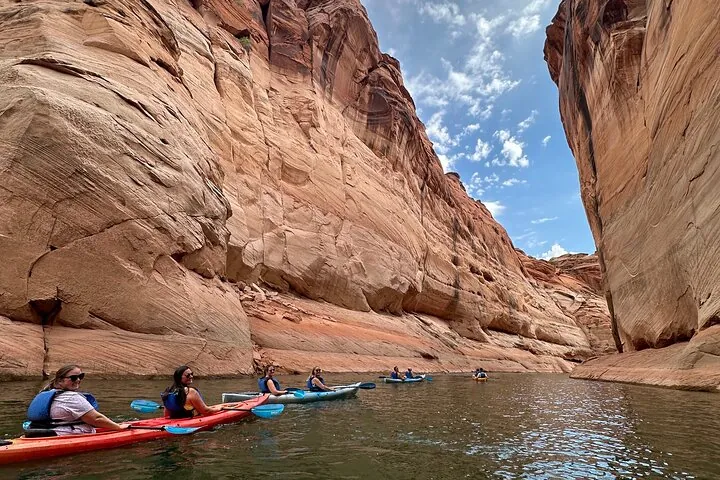
A guided March outing can be an especially good fit for visitors who want the lake experience without turning a limited vacation morning into a route, launch-access and equipment project. It is also useful for first-time paddlers, families and groups where not everyone brings the same confidence or outdoor experience. The goal is not to remove the adventure. It is to put more attention on the water and canyon, and less on guessing through logistics.
High Desert Paddle Co. provides the kayak, paddle, life jacket, dry bag and a practical briefing before launch. The Antelope Canyon kayak and hike is a strong choice for visitors who want both water and a guided canyon walk in one half-day outing. Seven Wonders is the gentler private option for a group that values an unhurried pace. Monkey Wrench is better suited to guests who genuinely want a more active day and are prepared for the mileage.
Compare the Lake Powell kayak tour options before booking, rather than choosing only from a photograph. The right trip is the one that fits the people coming with you, the available time and the day’s conditions. That makes the experience feel generous instead of rushed.
A Simple March Launch Checklist
The evening before, check the water forecast, confirm your meeting or launch plan, charge the phone and lay out the layers you want to reach first. At the water, pause before you unload. Is the wind stronger than forecast? Does everyone have a life jacket that fits? Can each person reach a warm layer without emptying a dry bag? Does the route still make sense for the people present and the time left in the day?
During the paddle, let the first hour inform the rest of the day. If the lake feels rougher than expected, someone is cold or the group is moving more slowly than planned, turn toward shore while the choice is still easy. A good plan should include a graceful exit before it needs one. Keep the return comfortable, then change into dry clothes, eat something and leave enough time for the drive back without a scramble.
March can be a beautiful time to paddle Lake Powell because the season still rewards attention. Use the conditions as part of the itinerary, not an obstacle to argue with.
How High Desert Paddle Co. Helps
High Desert Paddle Co. helps guests choose a Lake Powell day that fits the season, their group and the time they actually have. The purpose is a thoughtful outing with core gear and local route judgment in place, so visitors can spend their attention on the water and sandstone instead of trying to make every decision at the ramp.
If you are still deciding, begin with the Lake Powell kayaking guide, compare the tour choices or read the FAQ. A memorable March paddle does not need to be the longest route on the lake. It needs the right mix of conditions, comfort and time to notice where you are.
Frequently asked questions
Is March a good time to visit Lake Powell?+
March can be a rewarding time for travelers who enjoy longer days, bright desert light and fewer crowds than peak summer. Plan for cold water, changing wind and cool mornings, then choose an outing that fits the actual conditions.
Can you kayak Lake Powell in March?+
You can kayak Lake Powell in March when the forecast, route and group experience are a good fit. Check the marine forecast, wear a life jacket, dress in quick-dry layers and keep the route conservative enough for a comfortable return.
Is Lake Powell water cold in March?+
Lake Powell water is still cold in March, even when the air feels pleasant. Treat water temperature as part of the clothing and route decision, pack a warm dry layer and avoid assuming a sunny day removes the consequences of a splash.
What should I wear kayaking at Lake Powell in March?+
Wear quick-drying layers, an insulating layer, a wind-resistant shell, secure water-friendly shoes and sun protection. Keep a dry warm layer accessible in a dry bag and avoid cotton because it stays cold when wet.
Which Lake Powell trip is best in March?+
The Antelope Canyon kayak and hike suits visitors who want a guided paddle and canyon walk in one half-day plan. Seven Wonders is the easier private option, while Monkey Wrench is for groups seeking more paddling miles. The best fit depends on your group and the day’s conditions.